
Learning ThroughWonder, Play & Purpose.

At Ananya Tots, childhood is not a race to academic achievement. It is a journey of joyful discovery, where children learn by playing, asking, making and reflecting.
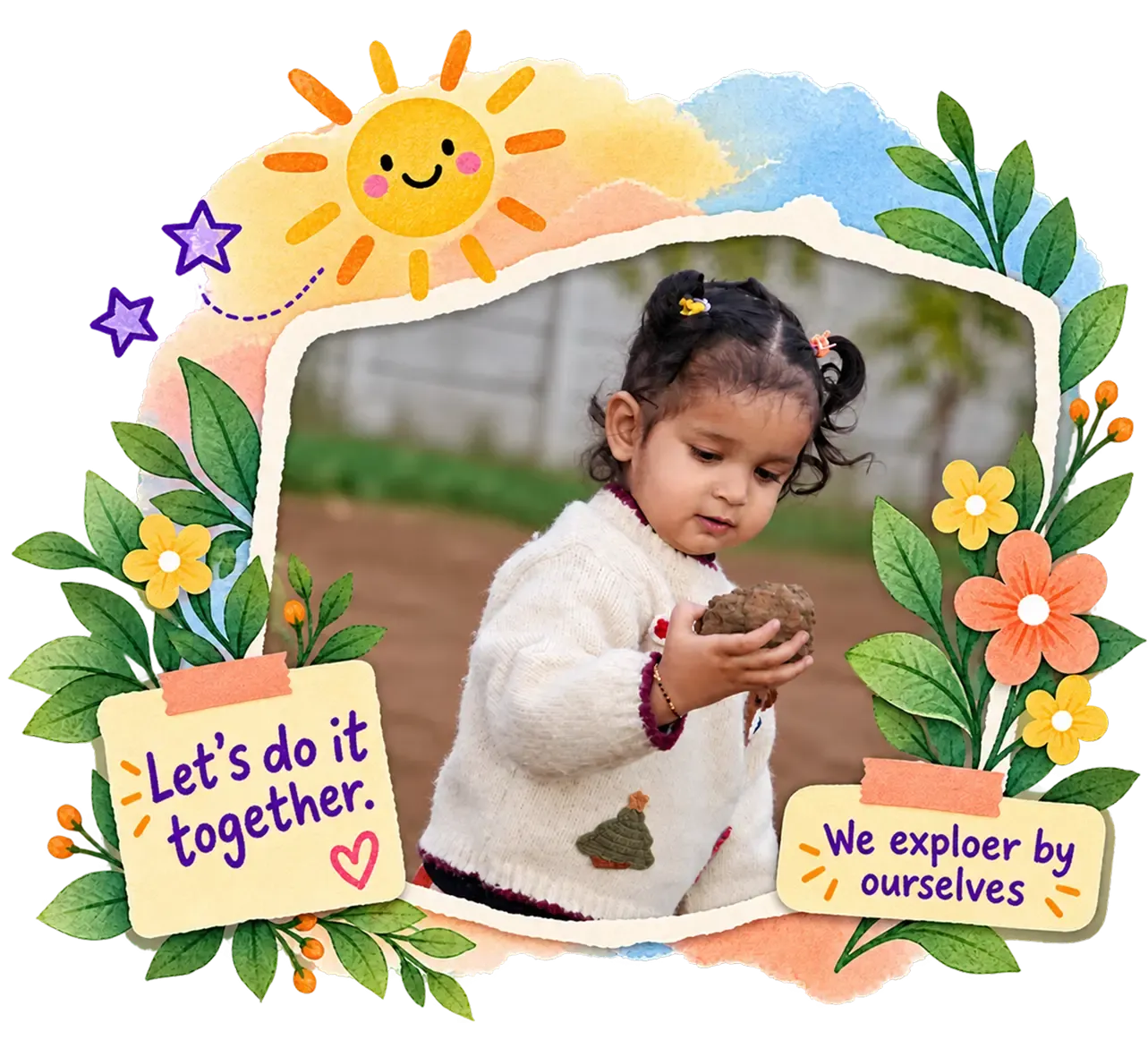 We learn by doing.

Our CurriculumSix Areas, One Joyful Journey.
Our curriculum is built on inquiry. Children explore the world through six areas of learning, woven together through themes and real experiences, never taught as isolated subjects.
Create
I wonder. I imagine. I ask.
Explore
I play. I investigate. I discover.
Reflect
I think. I share. I make meaning.
Language & Literacy
Listening, speaking, stories, Letterland phonics and early reading and writing.
Mathematical Thinking
Number sense, patterns, shapes and measurement through hands-on, Singapore Math-inspired experiences.
Understanding the World
Nature, people, communities and simple experiments.
Creative Development
Art, music, dance, drama and construction.
Physical Development
Gross and fine motor skills through movement and outdoor play.
Personal, Social & Emotional
Confidence, friendships, self-regulation and responsibility.
Inspired by the Super 3 approach and thoughtfully adapted for young children.
Play-Based LearningPlay Is Meaningful.
Play-based does not mean no academics. We use play as one of the most powerful ways young children learn.
Mathematics
Blocks, cooking, water, patterns, sorting and measuring.
Language
Storytelling, conversations, songs and dramatic play.
Science
Planting, observing insects, mixing materials and exploring shadows.
Social-Emotional
Collaborative play, friendships and solving problems together.
Physical Skills
Climbing, balancing, running and building.
Creativity
Drawing, painting, clay, music, movement and drama.
From Play to Action
- Play
- Explore
- Question
- Create
- Reflect
- Connect
- Act
The Teacher’s Role
Our educators observe, listen, notice interests, plan provocations, ask thoughtful questions and document learning. In a play-based classroom the teacher is never absent. She becomes a more thoughtful guide.

Language DevelopmentFinding Their Voice.
We want children to fall in love with words, stories and the joy of expressing themselves, discovering the magic of reading and writing along the way.
Listening
Learning to listen, understand, respond and enjoy stories.
Speaking
Finding their voice, building vocabulary and sharing ideas.
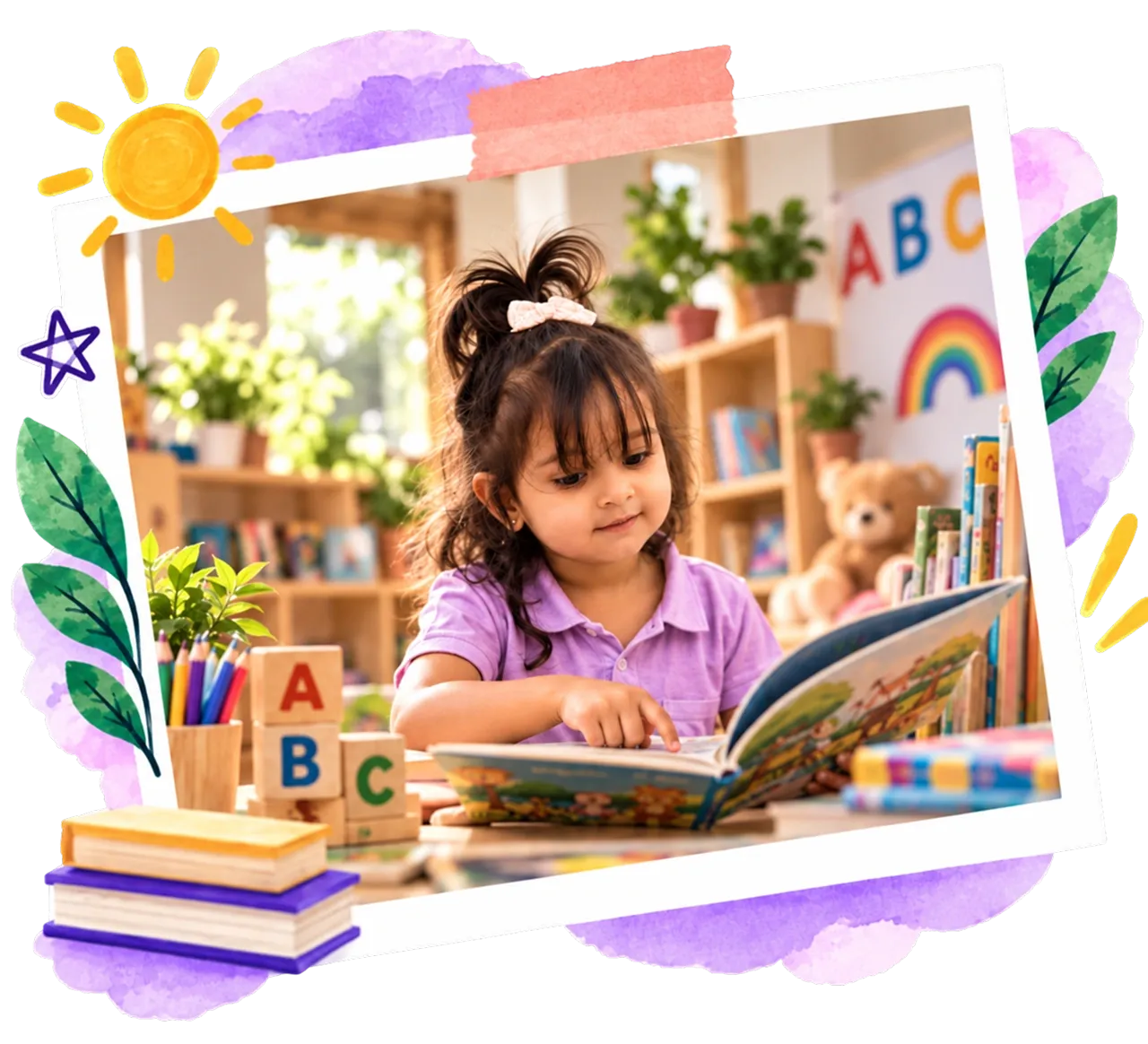
Reading
Discovering sounds, letters and words, and the joy of books.
Writing
Beginning with marks and drawings, then letters, words and sentences.
Our Letterland phonics programme gives a strong, systematic foundation in sounds and letters, always connected to stories, songs, movement, games and play. Our goal is confident communicators who have something to say, and the confidence to say it.
Art & CreativityMany Ways to Say “This Is My Idea.”
Every child has many ways of expressing what they think, feel and imagine. There is no single right way to create.
Art Atelier
A space to experiment with paint, colour, clay and open-ended materials.
Drama & Theatre
Imaginative and dramatic play where children act out stories and ideas.
Ideas Made Visible
A line may become a road, a block structure a house. Children’s work is displayed at eye level so they can revisit it with pride.
Music & MovementRhythm, Joy and Confidence.
Children learn through movement. Songs, rhymes and dance build rhythm, coordination, body awareness and confidence.
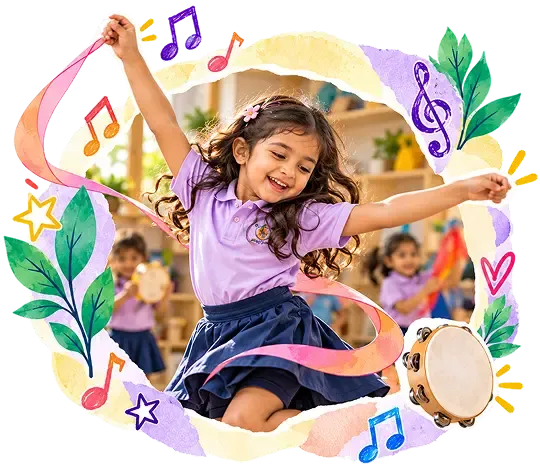
Sing & Rhyme
Songs and rhymes help children listen, join in and find new words.
Dance & Express
Movement shows what children feel and imagine, even before they have the words.
Move & Build
Climbing, balancing and jumping build strong bodies and coordination.
Outdoor LearningThe Outdoors Is Part of the Classroom.
Outdoor free play lets children decide what to play, with whom and how, building confidence, coordination and independence.
Nature Walks & Gardening
Children notice the world, care for it and ask questions.
Water & Mud Play
Sensory exploration with natural materials and room for experiments.
Curiosity in Action
“What makes a seed grow?” leads children to plant, watch, measure, draw and talk about what plants need.
Life Skills“I Can Do It Myself.”
Independence grows through everyday moments: making choices, managing belongings, caring for the space and helping others.
Self-Help
Eating independently, washing hands and putting things away.
Caring for Our Space
Reaching materials on their own and returning them to their place.
Dining Hall Skills
Serving themselves, using cutlery, pouring water, waiting and practising table manners.
Feelings & Friendships
Connection first, correction later. Understanding emotions, expressing needs and solving small conflicts.