








Play Is the VehicleFor Every Kind of Learning.

Learning is not removed to make room for play. Play is how young children learn, because they experience the world as a whole rather than as separate subjects. Our play-based, experiential and inquiry-led approach makes that learning visible.

Educator and two children examining pine cones and leaves with a magnifying glassCreate · Explore · Reflect
  • Play-Based Learning
  • Experiential Learning
  • Inquiry-Based Learning

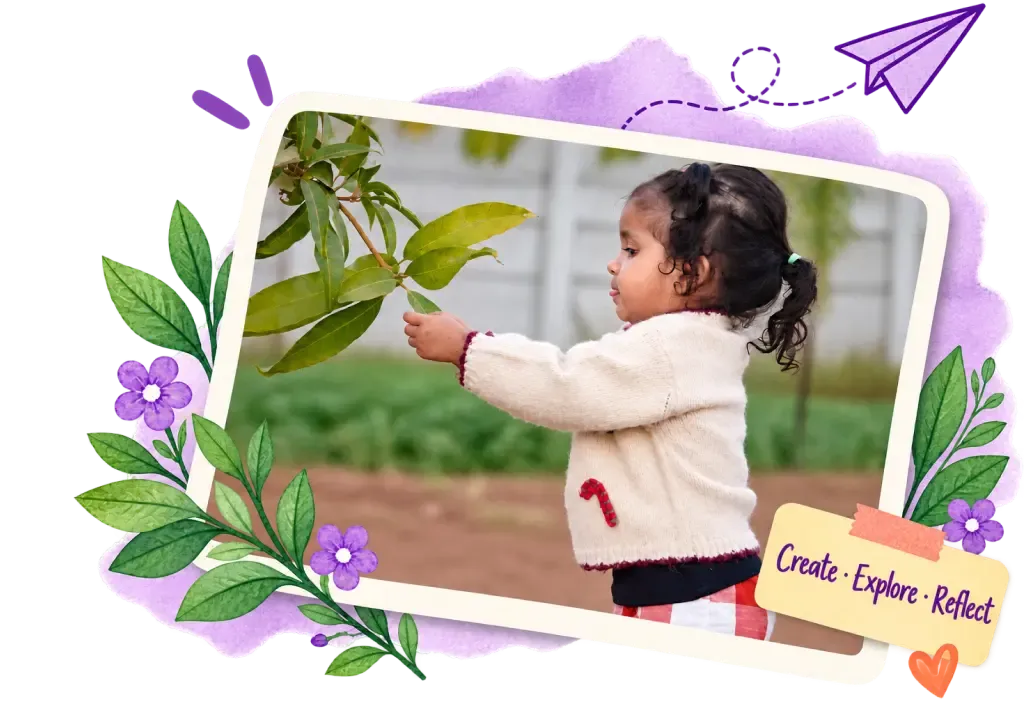
Our Inquiry CycleCreate → Explore → Reflect.

Inspired by the Super3 approach and thoughtfully adapted for young children, our inquiry cycle helps children learn naturally through curiosity and hands-on play.

  • Create (Action & Play)

    Children test their theories, build with open-ended materials and bring their imaginations to life.

  • Explore (Think & Wonder)

    Children meet new ideas, ask questions and investigate their surroundings through nature, stories and play.

  • Reflect (Share & Grow)

    Children look back at what they made, talk about their discoveries and celebrate their learning with teachers and peers.

Our CurriculumSix Connected Areas.

Through inquiry, our learners go deep into understanding the world around them, language and literacy, mathematics, creative learning and physical development, all woven together with personal, social and emotional growth.

  • Language & Literacy

    A language-rich world of stories, conversations, rhymes and Letterland phonics.

  • Mathematical Thinking

    Maths everywhere, through the Singapore Math Concrete–Pictorial–Abstract progression.

  • Understanding the World

    Themes children can touch, see, talk about, explore and enjoy.

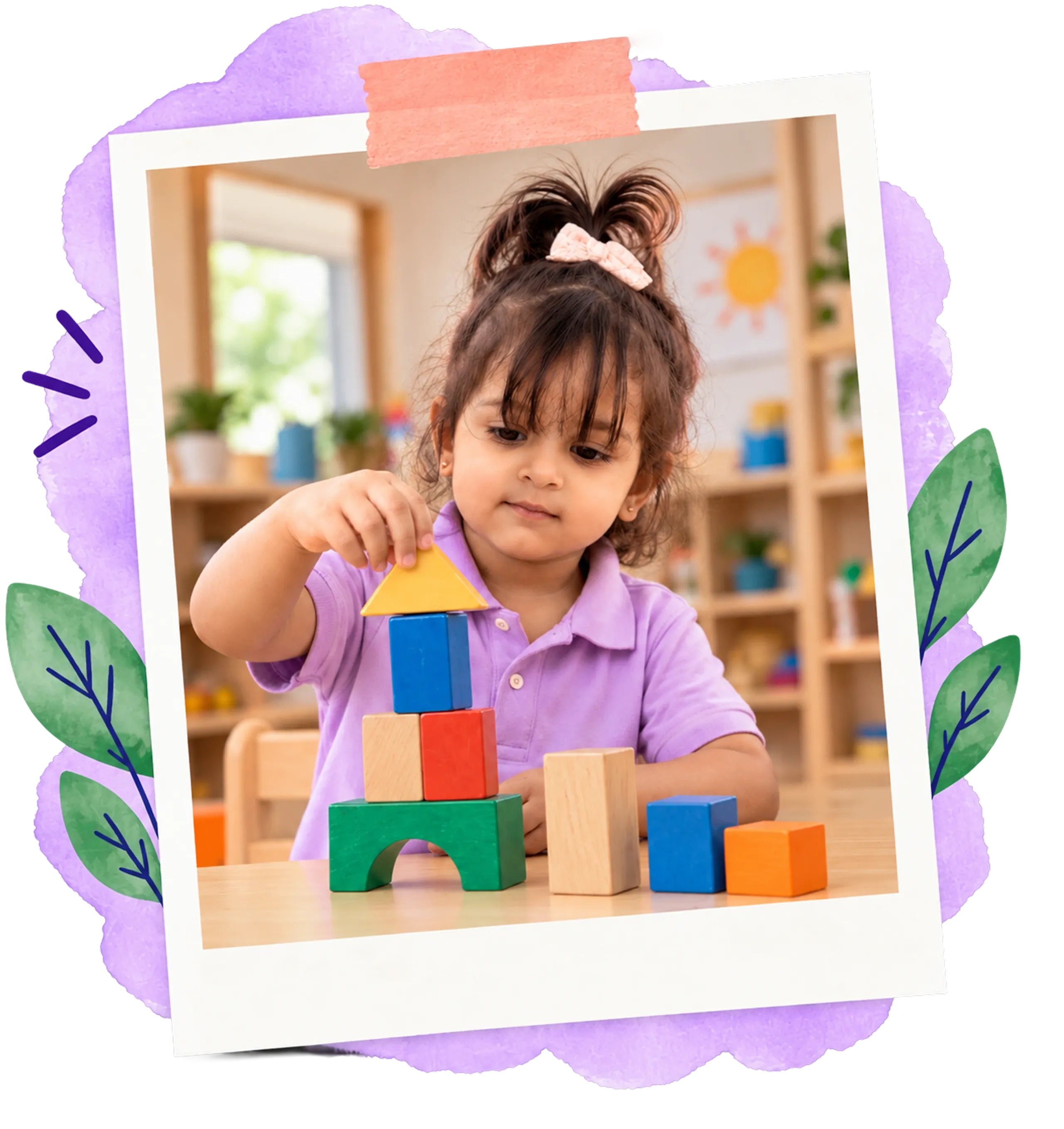
Boy carefully building a tower of colourful blocks
  • Physical Development

    Strength, balance, coordination and hand control through active play and self-help routines.

  • Creative Expression

    Art, music, dance and drama, with no single “right” way to create.

  • Personal, Social & Emotional

    Feeling happy, safe, loved and connected, the foundation for all learning.

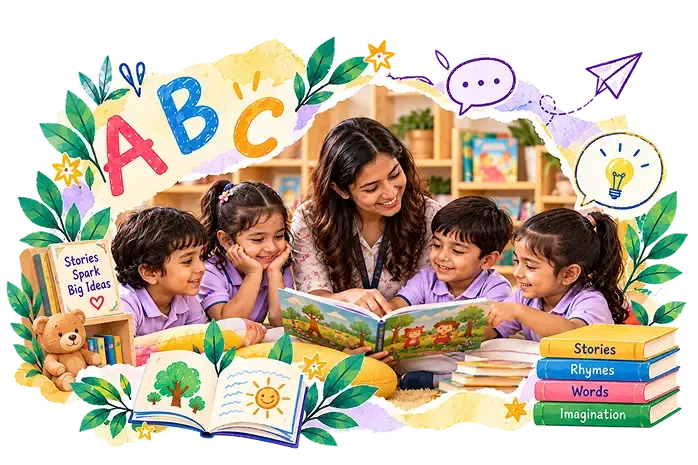
Teacher sharing a picture book with a group of children
Language & Literacy

Falling in LoveWith Words.

A language-rich environment helps children fall in love with words, stories and self-expression. We use the Letterland phonics programme alongside stories, conversations, rhymes, books and play.

Four Essential Skills

Listening · Speaking · Reading · Writing

  • Listening: listening, understanding, responding and enjoying stories
  • Speaking: finding their voice, building vocabulary and expressing ideas
  • Reading: discovering sounds, letters, words and the joy of books
  • Writing: from marks and drawings to letters, words and sentences
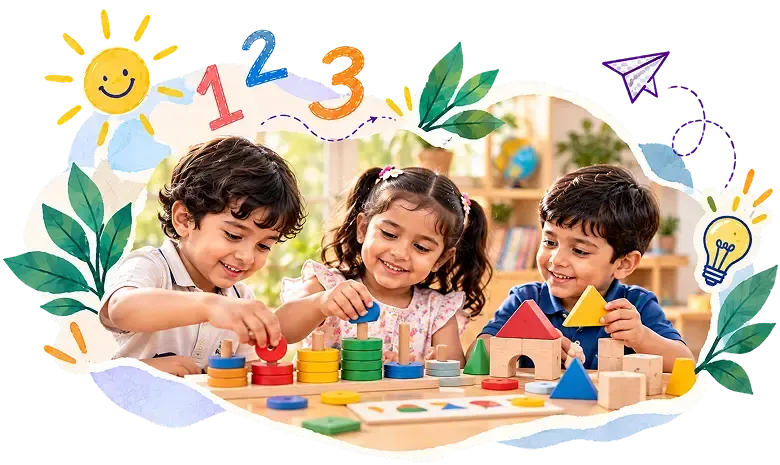
Boy experimenting with water and sorting colourful blocks
Mathematical Thinking

Maths IsEverywhere.

Children see mathematics in blocks, patterns, water play, shapes and everyday problem-solving. Inspired by Singapore Math, they move from real objects to pictures, and then to numbers and symbols (Concrete–Pictorial–Abstract), building deep understanding instead of rote memorisation.

Key Focus Areas

Joyful problem-solving

  • Number sense: counting, quantity and number relationships
  • Measurement: length, weight, capacity and time
  • Shape & space, patterns and relationships
  • Problem solving, reasoning and explaining ideas
  • Data: sorting, classifying and representing information
Girl observing a plant closely through a magnifying glass
Understanding the World

Thinking Like AYoung Scientist.

Children learn by experiencing the world directly: wondering about people, noticing changes in nature and asking how things work. Thematic learning brings real life into the classroom through stories, nature walks, research and simple experiments.

Key Learning Areas

Wonder, notice, discover

  • Nature & science: plants, animals, seasons and weather
  • People & our world: families, communities and cultures
  • Asking questions, predicting, trying things out
  • Caring for our world and using resources thoughtfully
  • Everyday life: how things work and why events happen

The Role of the TeacherPresent, Thoughtful, Purposeful.

A play-based school does not mean an absent teacher. Our educators are thoughtful professionals who follow a cycle of care in every experience.

  1. Observes
  2. Listens
  3. Notices interests
  4. Plans provocations
  5. Asks thoughtful questions
  6. Scaffolds learning
  7. Documents
  8. Reflects
  9. Plans the next experience
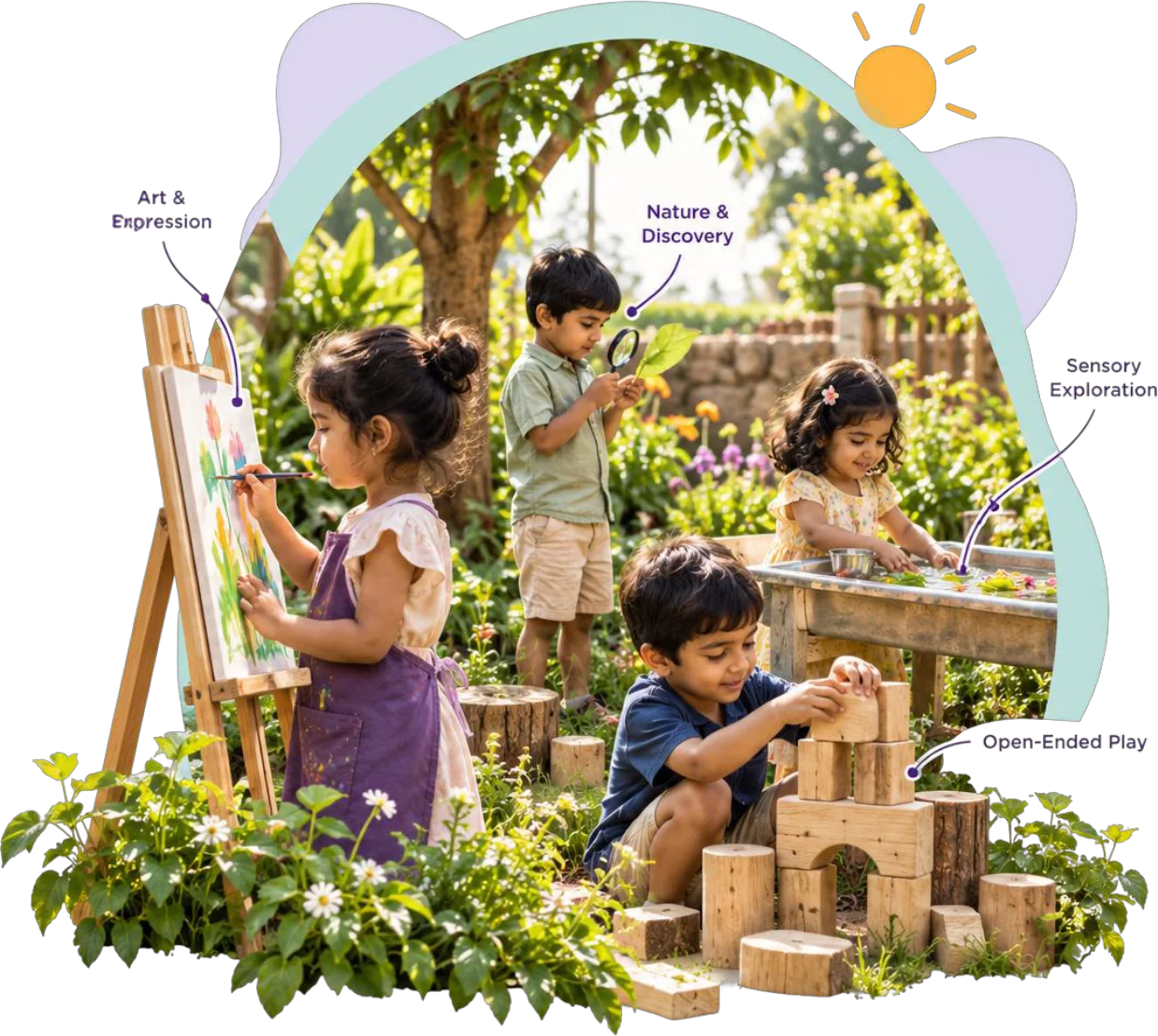
Children painting at an easel, exploring nature and building with wooden blocks in a garden

Integrated LearningOne Experience, Many Skills.

Learning areas are woven together through thematic and inquiry-based experiences, not taught as isolated subjects.

A single experience, such as exploring a garden, listening to a story, building with blocks or investigating water, brings together language, mathematics, science, physical development, creativity and social-emotional learning.